Phonics
Subject Leader: Mrs Walker
Our Phonics Approach at Barnfields
Phonics involves learning to read and spell by breaking words down into their spoken sounds (phonemes). This is one of the most vital skills children need on their journey to become readers. We prioritise high quality phonics teaching and use rigorous tracking to ensure every child becomes a reader.
We use Little Wandle Letters and Sounds Revised as our phonics programme used in school. This provides us with vibrant resources, clear progression and accurate assessment tools to support our reading teachers in delivering effective phonics sessions.
RECEPTION
Right from the start of Reception, children have a daily phonics lesson which teaches them to match the spoken sound to a single letter or pattern of letters. These are taught at a fast pace, four per week, to ensure that children can begin to use them to blend sounds together to read simple words as quickly as possible. Each sound is introduced with a memorable picture and handwriting phrase to engage children and make it memorable. We send home the parent support sheets below to enable you to support your child on their reading journey.
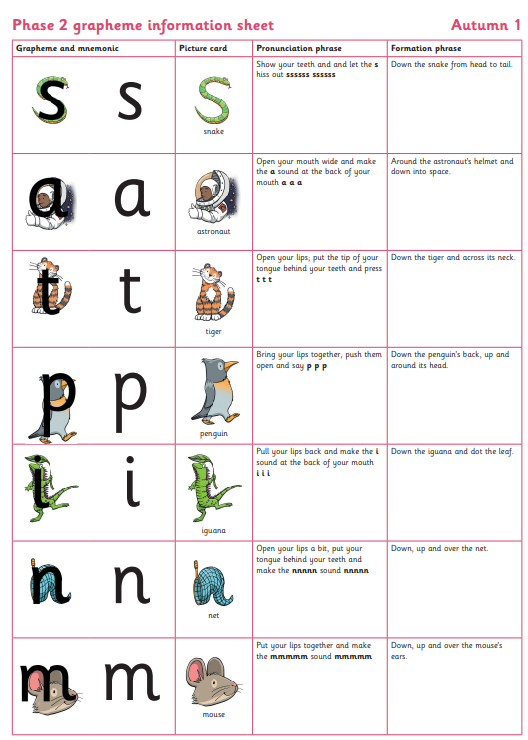
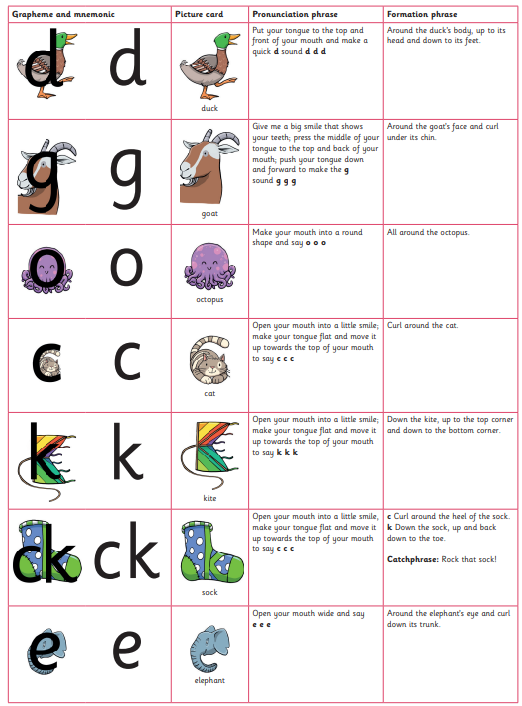
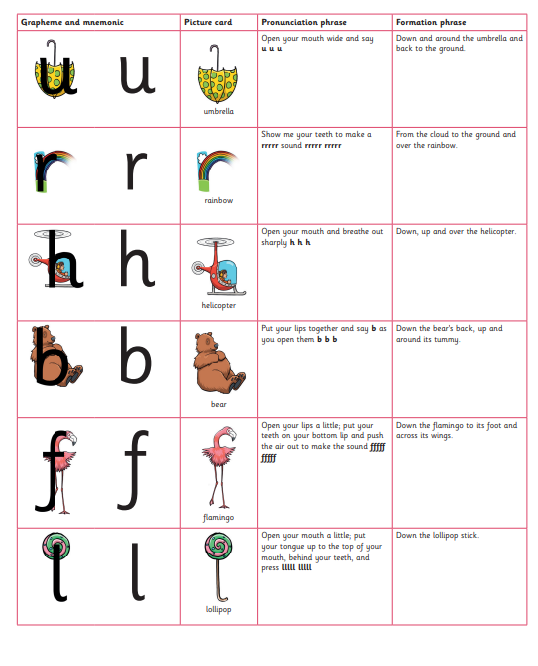
Each daily phonics session involves 3 parts:
1 – Revisit and review where children recap the sounds and words they have already been taught.
2 – Teach and practise where children are taught new sounds and practise saying them and using them to orally blend words.
3 – Practise and apply where children practise reading words with the new sounds in them and also learn to use the sounds to spell words.
During the second part of the Autumn Term and the Spring Term, children in Reception begin to learn digraphs and trigraphs. This is where two letters and three letters respectively make one sound:
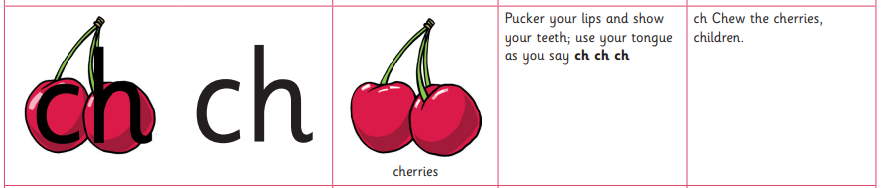
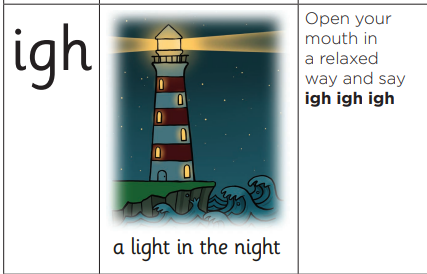
These sounds have a catchphrase which helps children to remember them. By learning these digraphs and trigraphs, many more words become decodable for children. For example, children can read the word light by breaking it up into the three phonemes l-igh-t.
There are some words which cannot be decoded using the sounds that the children have learnt so far and these words are called Tricky Words. Children are taught to read these words in the phonics sessions by identifying the part which is tricky.

Children are assessed at the end of each half term to ensure that they have learnt and can apply the knowledge taught. We use the Little Wandle tracker tool to identify any children who may require more support to ensure that children keep up rather than having to catch up. Children who are identified by the tracker will receive an additional intervention support session to ensure every child becomes a reader.
YEAR 1
Children continue their reading journey through phonics during year 1. They continue to receive daily phonics sessions following the same structure as the Reception lessons. This ensures that there is consistency and reduces their cognitive load which allows them to focus on the new content.
In Year 1, children are taught alternative graphemes that make sounds they have already learnt. This is called "growing the code" and makes even more words decodable for the children. For example:
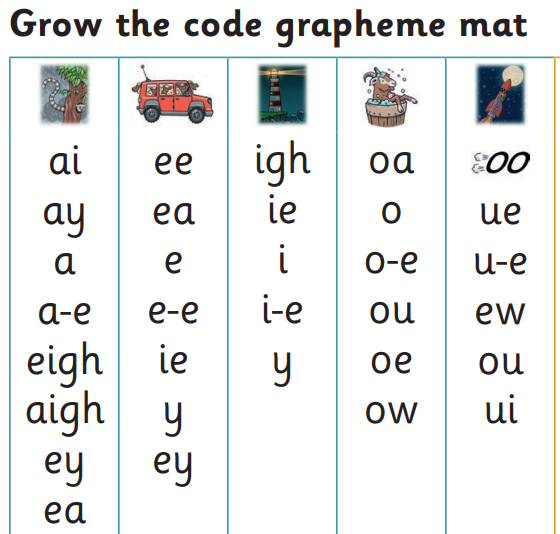
Children continue to be taught Tricky Words which cannot be decoded alongside applying the taught sounds to read decodable words.
Half termly assessments continue to identify any children who may need more support and keep up interventions are used to ensure all children become readers.
SUPPORTING YOUR CHILD IN LEARNING TO READ
To view the Little Wandle programme progression please see the attached programme overview below. You will also find a useful attachment with a glossary of Little Wandle Revised Letters and Sounds terminology which you may hear your child using when talking about phonics.
The Little Wandle website has a vast range of information dedicated to ensuring parents know how to support their child at home. This includes videos modelling the teaching methods used during our phonics sessions:
For parents | Letters and Sounds
_________________________________________________________________________________________________________________________________
The Yr1 Phonics Screening Check
The Phonics Screening Check is a Statutory Requirement at the end of Year 1 to assess whether individual children can phonetically decode to the required standard. It enables schools to identify children who need additional help to ensure they are given support to improve their reading skills.
The check is a short, simple screening check which consists of a list of 40 words and pseudo words (non-words), which the child reads one-to-one with their class teacher.
The Phonics Screening Check takes place every June.